Structured Frameworks. Collective Action. Shared Results.
SaRCiSP is a long-horizon development programme that helps vulnerable communities build their own resilience by turning local environmental challenges into recovered value and sustainable sources of income. It does this by enabling locally led interventions that are structured and co-designed with communities around their specific needs, opportunities, and capacities, while connecting them with the partnerships, expertise, and catalytic investment required to move from concept to implementation.
Each intervention operates within a shared governance architecture that provides common decision infrastructure, oversight, and accountability while preserving local ownership and autonomy.
These local structures are designed to form a global network of communities, connected through a shared governance framework that enables learning, collaboration, and mutual support across countries and regions.
As new communities join, the network expands geographically while developing into a shared community of practice. Each node contributes to and benefits from the collective experience of the wider network while retaining its own local ownership and autonomy.
The objective for each operating unit is to be:
(*) Participation is de-risked for the operating unit: its financial contribution becomes payable only once external funding for each intervention has been fully secured.
The challenge in resilience and circular-systems work is not only a lack of capital. Too often, the real gap is the absence of trusted systems through which funders can understand how their capital will be deployed and verify outcomes with confidence.
SaRCiSP closes that gap by providing the institutional and digital infrastructure needed for funders to model expected outcomes before committing capital and to verify delivery throughout implementation.
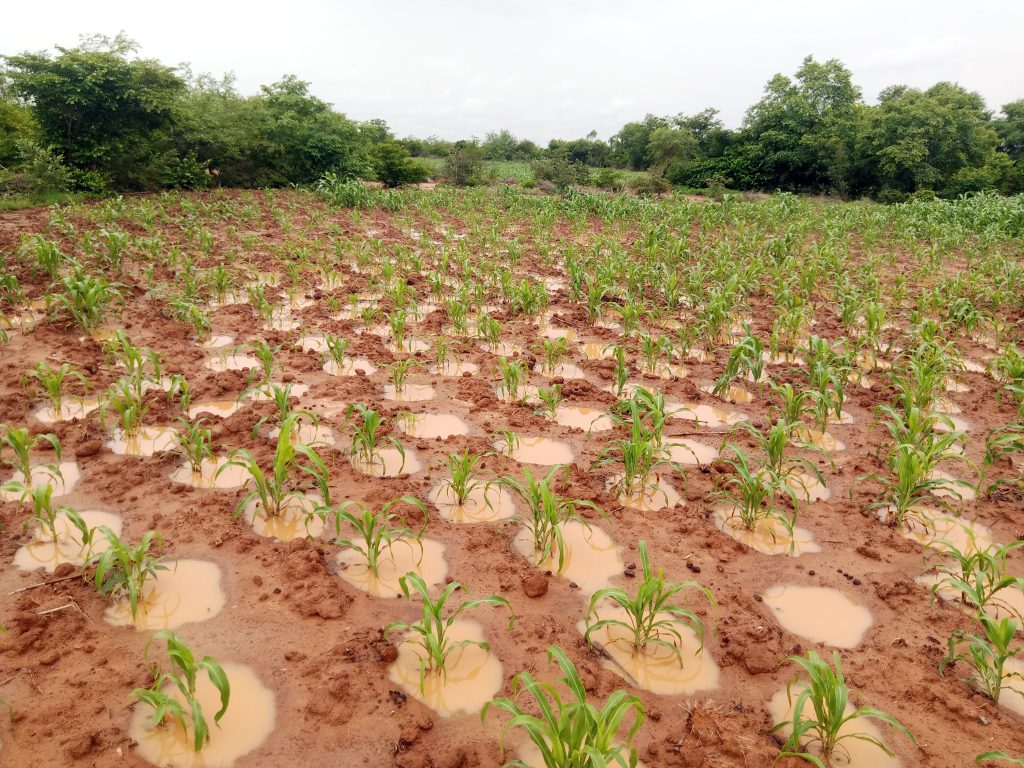
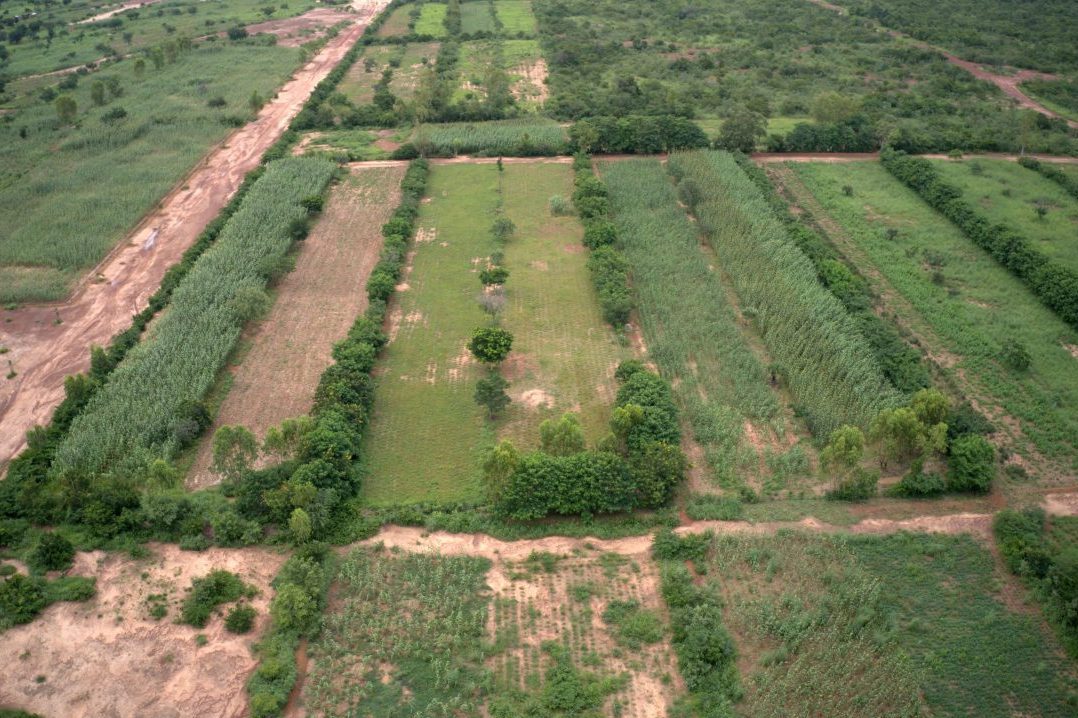
Photo credit: Terre Verte, Burkina Faso – www.eauterreverdure.org
Briefings and supporting documentation are available on request.
The design is a scalable pattern deployed one operating unit at a time. Each instance is tailored to its local context while sharing the same operating spine: operating units as the primary anchor, governments as enablers.
SaRCiSP anchors its work at a specific territorial unit – an operating unit – selected at the programme’s discretion for each pilot. The choice varies by country administrative structure, and may vary from region to region within a country, based on which unit best meets the selection criteria in that context.
The programme selects the smallest territorial entity that meets three criteria:
This is the smallest scale at which a self-reinforcing development dynamic can be initiated and sustained. An operating unit runs on four reinforcing loops – operations and capacity, vitality, trust and capital, network and cluster. SaRCiSP’s structuring capital and programme design carry the operations-and-capacity loop past the threshold where the others start to feed each other.
National governments enable; multilateral partners engage at regional level; capital is structured per branch (each branch is one operating unit engaged with SaRCiSP). The substantive work – implementation, people, infrastructure – happens at operating-unit scale.
This is deliberate. Resilience and circular-systems work that targets only national-level outcomes typically loses traction at the implementation layer. Anchoring at the operating-unit level keeps decisions with the people accountable to the population those decisions affect, and keeps infrastructure sized to communities that can sustain it.
Each operating unit deploys a tuned combination of interventions, sized to context, capacity and priorities. Note that not every intervention will appear in every commune.
Digital decision infrastructure (CSGF) is implemented to ensure coherence, accountability and transparency in how the programme is run, and how the commune is governed. Ultimately, it protects the integrity of the programme.
Coupled with systemic standards, it gives the programme a shared spine – common decisions, common evidence, common terms – so that one commune’s work can be assessed alongside another’s, and so that infrastructure and decisions persist through leadership and electoral cycles, and across generational transitions.
The standards are developed where the friction actually shows up – in real cases, in real institutional settings – and refined through a structured decision and review process.
Each intervention is selected for its fit with the operating unit’s context. New interventions are added as the programme evolves and new local problems come into scope.
Urban oases add shade and form cooling zones in commune environments – cooling islands of restored landscape and biodiversity. They are not just one intervention among many. They are the centre of gravity around which most SaRCiSP work in a commune organises. They give public space its first visible improvement, anchor community engagement, host environmental education, and provide the visual evidence partners and funders can see when assessing the work.
Every SaRCiSP commune is expected to deploy a network of urban oases. The detail varies – number, scale, integration with existing public space – but the principle is consistent: where infrastructure changes lives, urban oases are where the change shows up first.
SaRCiSP looks for interventions that solve more than one problem at once – interventions where an environmental fix, an economic flow and a local livelihood arise from the same activity. One example: invasive aquatic plants – typha in Senegal, water hyacinth in other parts of West Africa – choke waterways and farmland. Clearing them feeds a commune biomass plant; the plant pays by the tonne for what is delivered; the plant produces biogas, fertilizer and pavers; the surrounding ecology recovers.
Three wins from one intervention: an environmental problem removed, value created from waste, and an income stream for the people doing the work. SaRCiSP seeks out this design – solving a problem while creating value from it – wherever it can, in every commune where it operates.
An operating unit that has crossed its threshold joins a cluster – trading, sharing methods, and co-funding hubs – held together by SaRCiSP.
Some arrangements operate at the programme level rather than within an individual commune – connecting branches, structuring capital, or creating partnerships beyond what any single commune could carry alone.
The basic approach is to assess each municipality’s main challenges and identify interventions that both address those challenges and strengthen the municipality’s long-term resilience and development.
In return, we ask the municipality to cover a modest operational fee, collaborate throughout the process, and commit to co-financing a small share of each intervention alongside the funder. Typically, the municipality’s contribution would range from 10% to 30%, depending on the nature of the intervention.
Importantly, the municipality’s contribution would not be payable until the remaining funding has been secured. This significantly de-risks the project for the municipality, as it is only asked to contribute once the project is fully funded and ready to proceed.
SaRCiSP brings constituent initiatives under common institutional scaffolding across host countries.
Branches launch as operating units come into scope, and active branches operate in parallel.
CSGF builds a transparent institutional record of every decision, applied across the programme with integrity and coherence. The methodical application of systemic standards ensures its continuity.
Knowledge captured across active branches is curated and redistributed, so each commune benefits from the work of others. A core SaRCiSP function.
The articles below provide contextual perspective on systemic standards and regenerative land-use practice. They illuminate conditions that matter directly to circular food systems.

128 City Road
London EC1V 2NX
United Kingdom
Copyright © Terravive Group 2025. All Rights Reserved.
Companies House reg. no 16233378