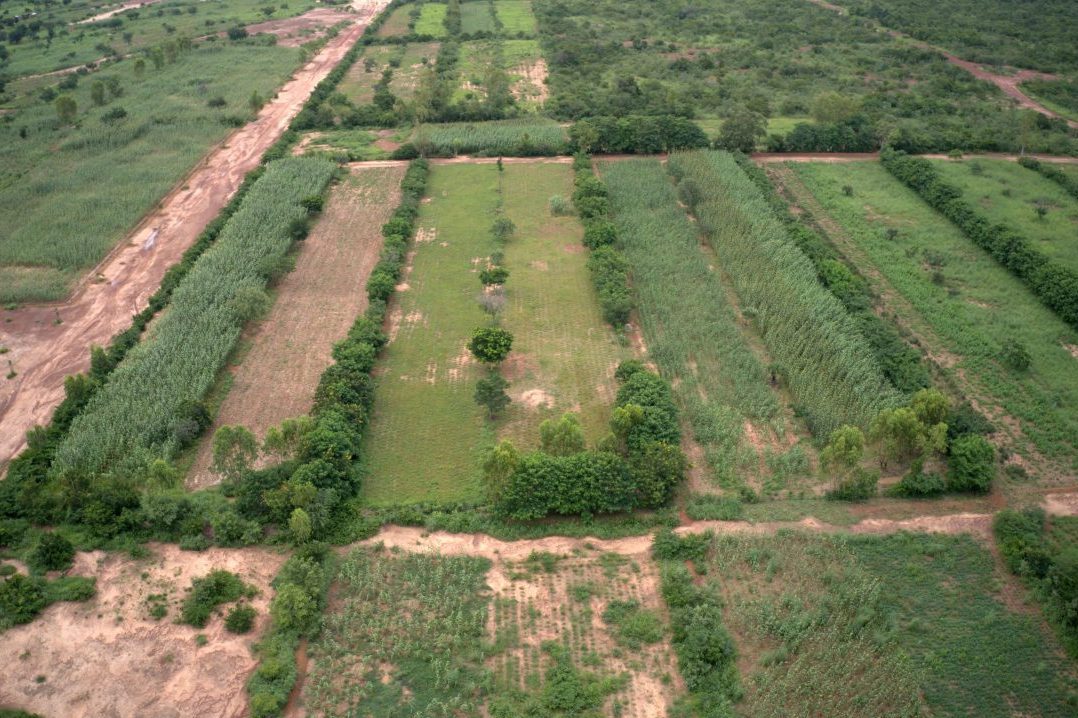
The Circular Food Systems Initiative (CFSI) develops a practical framework for strengthening food systems across the lifecycle, from production through post-harvest handling, processing, distribution, end use, and organic recovery. In each development context, the framework is applied where failure, fragmentation, and value loss are most severe.
At present, post-harvest continuity tends to be one of the weaker points in the chain. CFSI treats it as part of a broader lifecycle challenge that also includes food integrity, environmental impact, and upstream production conditions.
In many fragile and emerging economies, food-system failure is not only a question of insufficient production. It is also a question of lifecycle leakage, food integrity, environmental pressure, weak processing capacity, fragmented logistics, and organic residues leaving the system instead of being recovered. The result is a food system that loses economic, nutritional, and ecological value it could and should retain.
CFSI exists to address that condition. It brings a clearer framework to a domain that has too often been approached through isolated projects, technologies, or funding instruments without a coherent basis for continuity.
CFSI is being developed through a small set of active and emerging development contexts. Current work in West Africa, particularly in Senegal and Burkina Faso, provides a strong basis for early application, supported by existing relationships, local capacity, and production-side work already underway through the Sahel Bridge Initiative.
Additional contexts, including Ghana and Iraq/Kurdistan, are being explored to test how the framework applies under different system conditions. These contexts do not define the initiative, but provide practical environments in which its logic can be examined, challenged, and strengthened.
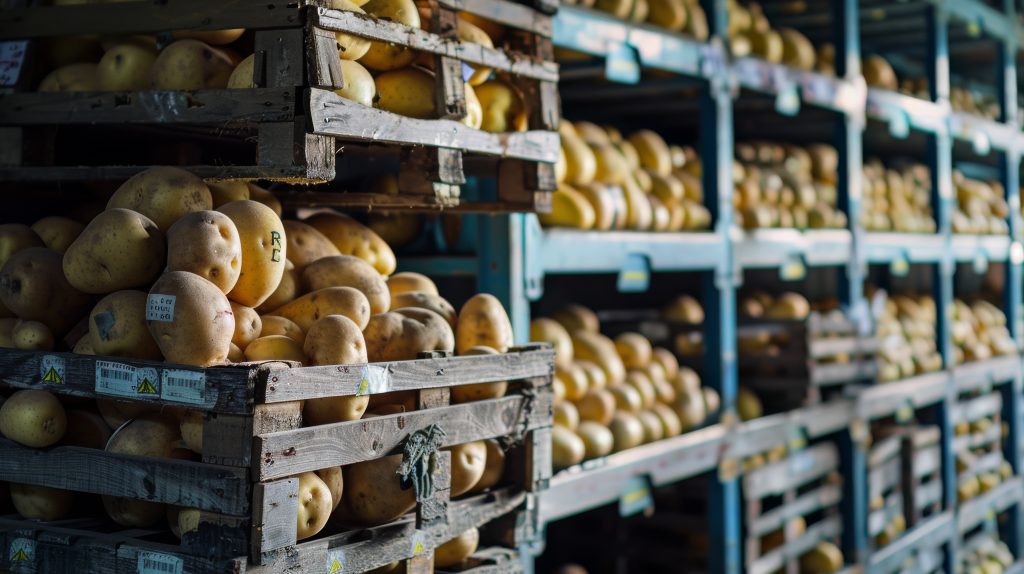
Overview materials, framework documentation, and supporting background are available upon request.
Beyond production shortfalls and post-harvest leakage, food-system failure includes weak food integrity, lifecycle environmental impact, poor recovery of organic side streams, fragmented handling and processing, and institutional arrangements that fail to keep these functions aligned.
CFSI responds at framework level by defining the logic, rules, and procedures needed to strengthen continuity across the food-system lifecycle where the chain is weakest.
CFSI is in active development. Current work is focused on clarifying the framework, strengthening its internal logic, and building a stronger basis for pilot application and broader implementation.
The framework is intended for use across the food-system lifecycle, but it does not assume the same pressure points in every context. It is applied where breakdowns are most severe, so that continuity, value retention, recovery, and coordination can be strengthened where the chain is weakest.
Early application is there to test and strengthen the framework, not to reduce it to a single pilot or geography. Current development contexts help show where the framework holds, where it needs refinement, and how its logic matures through use.
CFSI incorporates machine-intelligence-supported decision infrastructure as part of its broader architecture. At this stage, it supports analysis, option assessment, and clearer handling of interdependencies as the framework is developed.
This work has also produced an internal strategic simulation prototype, used to test framework logic, compare intervention pathways, and examine how different food-system variables interact across development contexts.
Capability development sits within CFSI as an execution-enabling layer. It is not treated as a generic training function, but as a way to prepare public institutions, operators, implementation partners, and other relevant actors to apply the framework in real conditions.
These programmes can be activated as implementation needs become clearer, with content shaped by the specific development context, actor roles, and weaknesses identified across the food-system lifecycle.
The initiative is anchored under the following standards within the UGA architecture: UGA-0000422 (Food & Biological Systems Continuity), UGA-0000304 (Clean-Loop Processes), and UGA-0000413 (Ecological Continuity), with cross-domain positioning informed by UGA-0000440003 (Food-Water-Energy Nexus). Within that architecture, relevant food-system standards are being developed around food-chain leakage, food integrity, lifecycle environmental impact, value retention, organic recovery, documentation, coordination, and institutional responsibility. It gives the initiative a more durable basis for application, review, and continuity across different contexts, while minimizing reliance on goodwill, informal interpretation, and ad hoc coordination.
In practice, the standards layer shapes how interventions are framed, what must be documented, how responsibilities are assigned, and how continuity is preserved as implementation passes between actors, institutions, and operating cycles. The standards are clarified progressively through development, application, and evidence from the contexts in which the framework is used. This reduces a common failure mode in food-system work, where interventions become fragmented or lose coherence as they move between institutions. It also gives the framework a clearer basis for interpretation, stronger continuity in application, and a more credible path toward broader institutional adoption.
Where relevant, this layer is intended to align with established international standards and frameworks such as ISO 22000, ISO 14001, and ISO 31000, while maturing through application rather than being imposed as a fixed stack from the outset.
The articles below provide contextual perspective on structural financing, systemic standards, and regenerative land-use practice – illuminating conditions that matter directly to circular food systems.

128 City Road
London EC1V 2NX
United Kingdom
Copyright © Terravive Group 2025. All Rights Reserved.
Companies House reg. no 16233378