
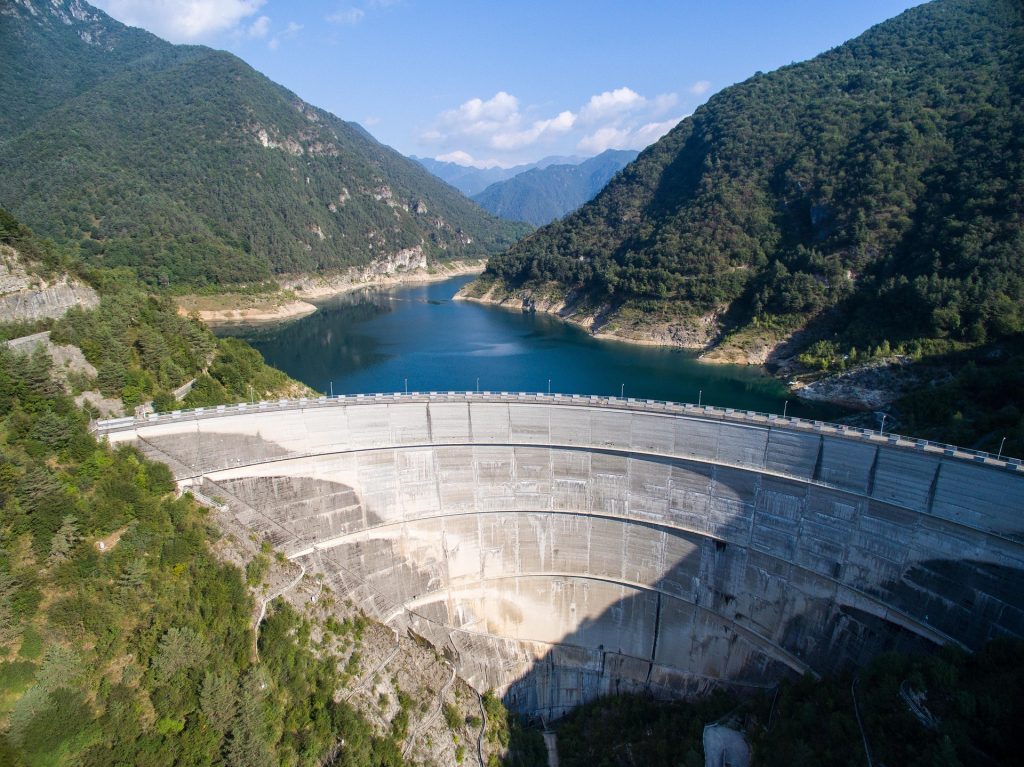
Circular Hydro Decom & Transition Solutions provides a structured framework for aging hydropower assets. It supports rehabilitation, modernization, stabilization, repurposing, and, where appropriate, full decommissioning.
The initiative combines governance architecture with engineered intervention pathways, enabling asset-transition decisions to be made in a more structured and auditable way rather than being deferred until failure dictates response.
A significant share of the global hydropower fleet is aging, creating growing pressure for rehabilitation, modernization, repurposing, or retirement decisions. CHDTS provides the governance conditions and technical pathways needed to support earlier, more structured intervention before risk, cost, or ecological liability escalate further.
Circular Energy Infrastructure serves as the platform layer for circular energy initiatives within the TG ecosystem.
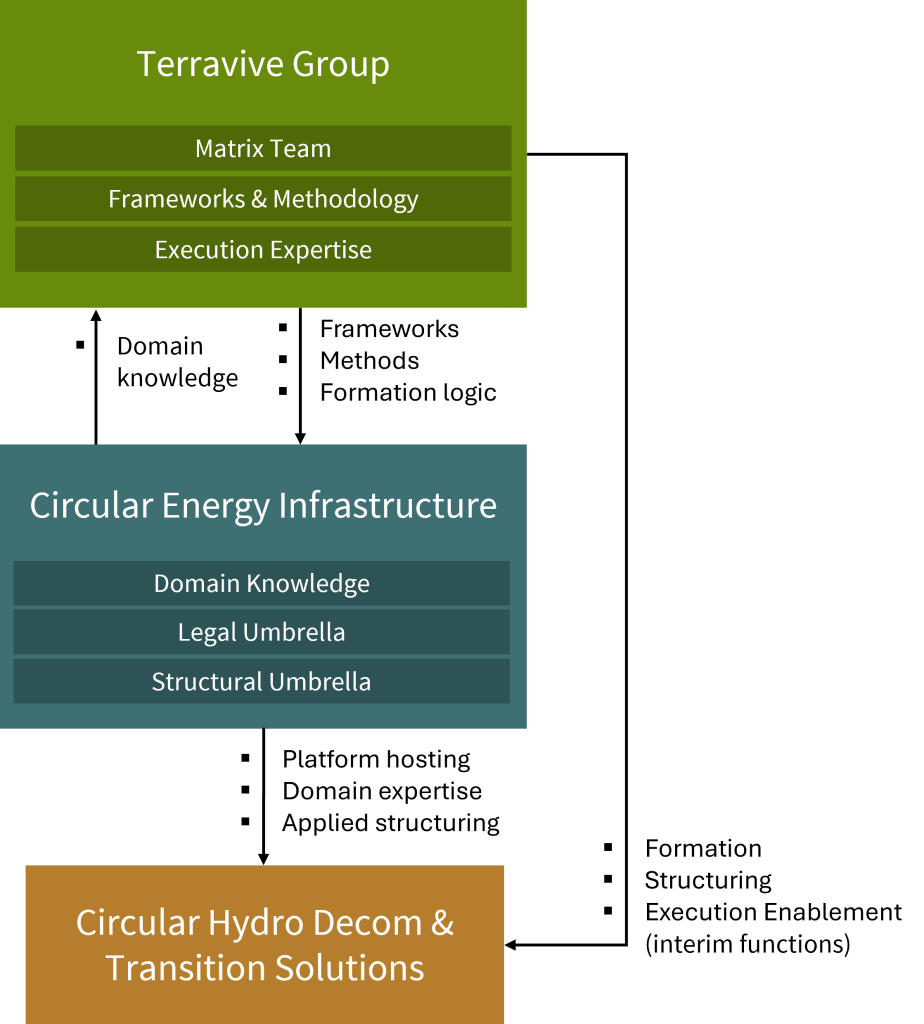
Execution materials, modelling outputs, and certification pathway documentation are available upon request.
CHDTS operates through three intervention tracks:
Rehabilitation and modernization where continued operation remains justified
Stabilization, partial retirement, or repurposing where asset conditions or context require transition
Full decommissioning where continued operation no longer makes technical, ecological, or institutional sense
This integration of governance and physical intervention positions CHDTS as both a risk mitigation mechanism and a structured framework for decision-making across aging hydropower assets.
The structural design has been defined, and the core intervention model is established. The initiative is anchored in the System Resilience super-standard.
The initiative is grounded in UGA standard families whose constraints materially shape design viability, including UGA-0000404 (Energy & Infrastructure Continuity), UGA-0000413 (Ecological Continuity), and UGA-0000503 (Decision Integrity). These domains structure accountability chains, intervention sequencing, funding eligibility, and auditability across jurisdictions and institutional transitions.
The UGA standards are currently at Concept stage and are advanced toward multilateral adoption through demonstrated real-world compliance, which this initiative is designed to help provide alongside other initiatives.
Where relevant, the UGA standards are designed to align with established international standards and frameworks relevant to aging hydropower assets, including asset management, risk management, and environmental management approaches such as ISO 55001, ISO 31000, and ISO 14001.
End-of-life accountability in hydropower is uneven across jurisdictions: while operators may face legal duties around dam safety, rehabilitation, remediation, or closure, clear frameworks for staged transition, insolvency-proof financial security, and long-horizon execution are far less consistent.
In many cases, rehabilitation obligations, environmental liabilities, and decommissioning responsibilities are distributed across fragmented legal and institutional arrangements, leaving uncertainty over who carries responsibility, under what conditions, and with what secured funding if asset ownership, political priorities, or financial viability change.
Circular Hydro Decom & Transition Solutions is designed for this reality: structured asset-transition pathways reduce end-of-life risk at the engineering and governance levels, while bankable security and accountability structures help close the funding gap where regulation alone does not.
CHDTS is structured with multiple commercial pathways to enable flexibility across jurisdictions and asset conditions. These include advisory and framework-led engagement, transition planning, and the direct structuring of intervention pathways for rehabilitation, repurposing, stabilization, or decommissioning.
As an asset-transition framework, CHDTS can engage asset owners, public authorities, and delivery partners at relatively early stages, where intervention strategy influences risk allocation, regulatory pathway, funding structure, stakeholder coordination, and execution sequencing. This positions CHDTS as a natural integration point for selected technical, institutional, and financial partners, with the option to act through aligned delivery structures where this strengthens coherence and execution.

128 City Road
London EC1V 2NX
United Kingdom
Copyright © Terravive Group 2025. All Rights Reserved.
Companies House reg. no 16233378