The Sahel Bridge Initiative (SBI) strengthens the operating environment required for large-scale ecological restoration across the Sahel. It works between restoration initiatives, national programmes, technical partners, funders, and multilateral institutions to improve alignment, reduce fragmentation, and make restoration programmes more coherent, fundable, verifiable, and durable.
Sahelian restoration’s hardest problem is not planting. It is keeping restored land restored across the decades that ecological recovery actually requires.
SBI does this through:
Despite operating across extended time horizons and multiple institutional layers, large-scale dryland programmes under the GGW framework repeatedly encounter structural bottlenecks: short funding horizons, fragmented execution mandates, discontinuous coordination, and uneven monitoring standards.
These constraints are institutional rather than ecological. They stem from time-bound financing structures, mandate fragmentation, and the absence of a structured continuity mechanism linking capital, oversight, and field execution.
The financing logic is embedded within the governance architecture of the programme, aligning capital deployment, verification standards, and operational mandates at the structural level. Delegation chains, data custody rules, and consolidated reporting pathways ensure that funding commitments, monitoring systems, and field execution remain institutionally connected. The result is sustained accountability beyond individual funding cycles and leadership transitions.
SBI translates this operating logic into staged capital sequencing, verification thresholds, and funding conditions:
Catalytic capital initiates structured programme activation
Milestone verification unlocks blended and concessional layers
Institutional capital assumes long-term positions as risk declines
Multi-year O&M commitments are secured to protect survival across seasons
Disbursements are conditional on defined performance criteria
Capital deployment follows defined verification thresholds and multi-year continuity commitments, progressively reducing execution risk as institutional confidence increases.

Significant institutional capital is already directed toward large-scale restoration and resilience initiatives. The harder constraint is often not willingness to fund, but confidence that the programme can be executed, verified, and maintained beyond the first funding cycle.
SBI strengthens the conditions around programme design, coordination, evidence, and long-term responsibility so capital can move with greater assurance.
Execution materials, modelling outputs, and certification pathway documentation are available upon request.
Within the Unified Governance Continuum (UGC), the Sahel Bridge Initiative illustrates how territorial-scale ecological programmes can remain governable over multiple decades by sustaining governance memory, financing continuity, and stewardship obligations.
The initiative is grounded in two UGA standard families: UGA-0000107 (System Governance) and UGA-0000125 (System Resilience). The specific standards within these families that materially shape design viability include UGA-0000215 (Multilateral Governance), under System Governance, and UGA-0000413 (Ecological Continuity), under System Resilience.
Collectively, these standards constrain programme design choices upfront, ensuring that implementation, financing, and stewardship obligations remain coherently linked across decades.
In practice, the combined standard set defines non-negotiable requirements for governance continuity, financing discipline, ecological stewardship, institutional memory, and accountability chains. This helps prevent the common failure mode where stewardship, financing, and coordination decisions are deferred, improvised, or made infeasible by earlier governance and design choices.
These UGA standards are currently in late-stage drafting and are being advanced toward multilateral adoption through demonstrated real-world compliance, which this initiative is designed to help provide alongside other initiatives.
SBI is currently being operationalized through its first field pilot in Burkina Faso, with Terre Verte serving as the field implementation partner. The pilot applies SBI’s programme logic within an active restoration environment, where the Sahelian bocage model is already established through practical field experience.
The pilot builds on Terre Verte’s long-standing work with bocage systems, known locally as wégoubri. Its purpose is to assess how restoration work can be organized, financed, monitored, and maintained when capital sequencing, verified delivery routines, reporting, and coordination requirements are built into the programme from the outset.
This creates SBI’s first operational validation setting: a pilot that connects Terre Verte’s field implementation capacity with a clearer framework for long-horizon restoration finance, delivery verification, and continuity under real institutional and field conditions.

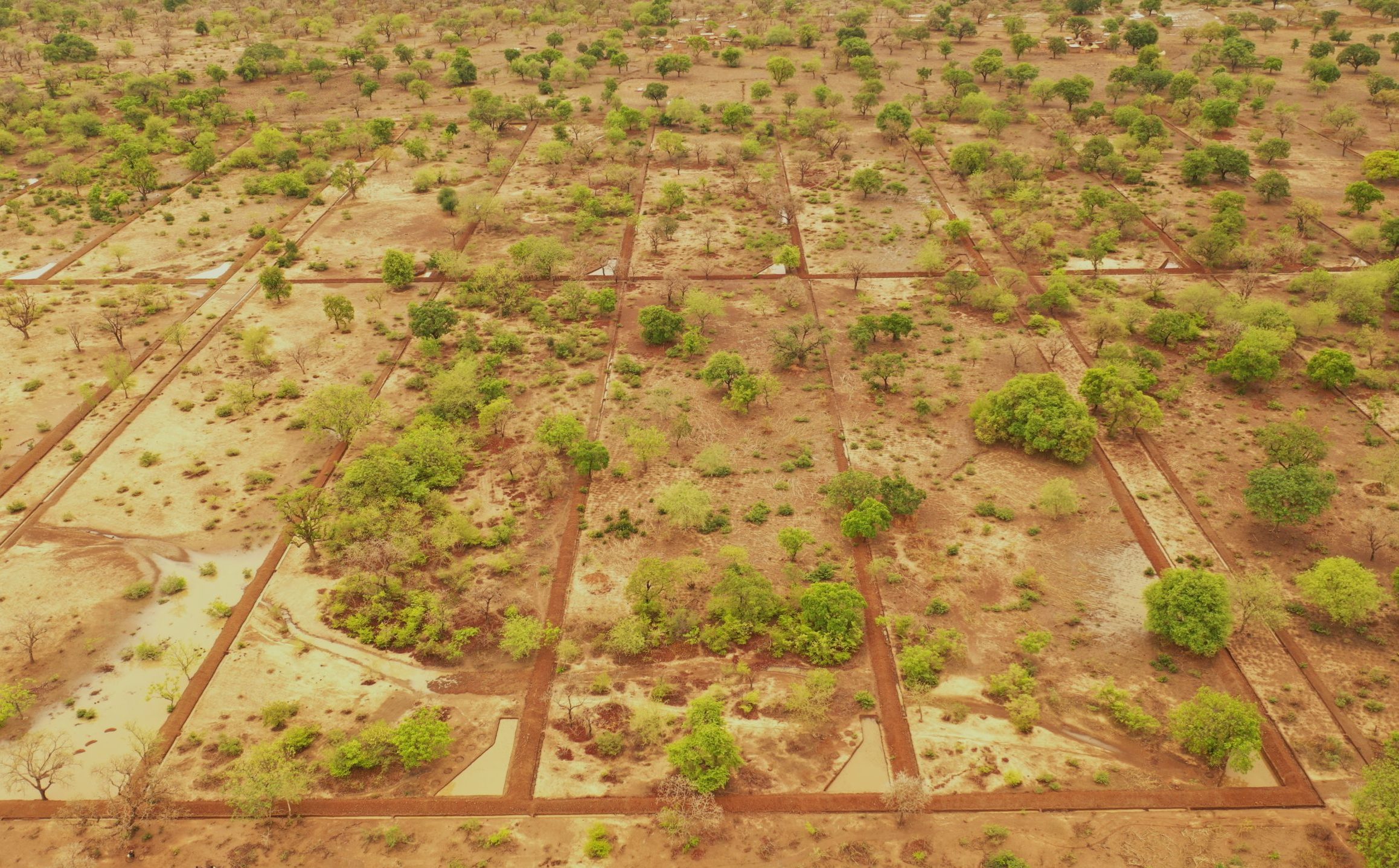
Photo credit: Terre Verte, Burkina Faso – www.eauterreverdure.org
Rural degradation across the Sahel has intensified over recent decades, driven by erosion, uncontrolled runoff, extensive grazing, and declining soil fertility. On the Central Plateau of Burkina Faso, these dynamics have reduced agricultural resilience and increased vulnerability to climatic variability.
In response, Terre Verte developed and implemented a hedgerow perimeter model (bocage, known locally as wégoubri) designed to retain water where it falls, stabilize soils, and structure land use within defined commons and individual plots. The model combines earthen dikes, single and mixed hedgerows, controlled access points, and pasture with electric fence grazing, with the entire perimeter managed as a form of joint ownership by the participating farmers.
This approach reconfigures agricultural space to reduce runoff, limit livestock intrusion, and enable soil restoration practices such as zaï cultivation and composting. The result is a structured agro-sylvo-pastoral environment capable of supporting sustained productivity under semi-arid conditions.
Within the Sahel Bridge Initiative, Burkina Faso serves as the initial validation node, where this perimeter model is being assessed under defined survival, reporting, coordination, and capital sequencing parameters.
Terre Verte has operated in Burkina Faso since 1989, developing and implementing bocage systems (wégoubri) through inter-village associations, each owning a pilot farm serving as an operational anchor for bocage development. The model integrates soil and water conservation, livestock management, and agroecological intensification within jointly managed spaces structured around the Sahelian bocage perimeter framework.
The concept was developed at the Guiè Pilot Farm in the 1990s and has since been replicated across multiple sites. It combines earthen dykes, hedgerows, shared infrastructure, and structured land consolidation mechanisms to mitigate erosion, retain water, and stabilise agricultural productivity, while also addressing structural challenges related to rural land tenure.
Terre Verte also manages the Centre de Formation des Aménageurs Ruraux (CFAR), also known as the École du Bocage, formally established in 2008. The centre provides multi-year technical training in the restoration of degraded land, rural road and bulli construction, agroecology, ecological livestock management, forest nurseries and reforestation, and rural crafts.
In the Burkina Faso Pilot, Terre Verte serves as the designated field implementation partner, operating within the structured validation, monitoring, and capital sequencing framework established by SBI.


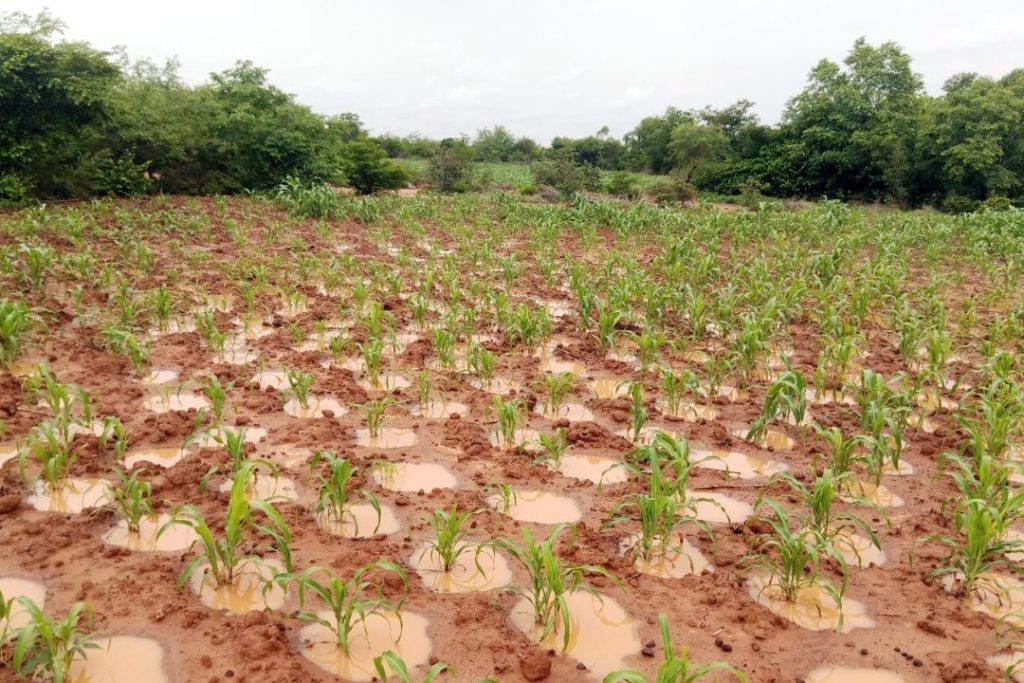
Photo credits: Terre Verte, Burkina Faso – www.eauterreverdure.org
Senegal is being structured as SBI’s second pilot, in collaboration with Tolou Keur, the agroecological programme and flagship food-forest initiative of the Great Green Wall authority in Senegal.
The pilot builds from the validation work established in Burkina Faso. Its purpose is to combine Terre Verte’s long field experience with the Sahelian bocage method with restoration practices, land-use conditions, technical capacity, and local methods already present in Senegal.
This creates a Senegal-specific starting point for SBI, connecting the Sahelian bocage model with Tolou Keur’s food-forest logic, national restoration priorities, and the Great Green Wall’s wider objectives in Senegal.
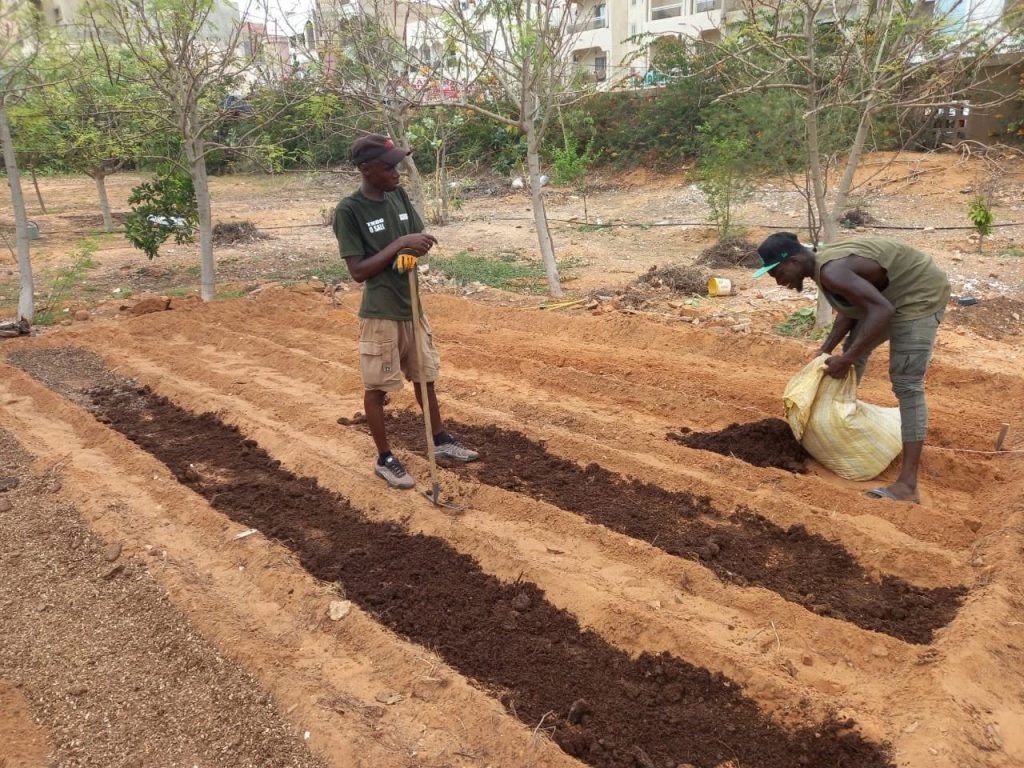
Photo credit: Tolou Keur Dalal Diam, Senegal – www.asergmv.sn
Senegal’s Great Green Wall work operates within a restoration environment shaped by land degradation, rural livelihood pressure, food-security needs, and the challenge of coordinating restoration across institutions, territories, and implementation actors. Existing Great Green Wall assessments for Senegal also point to practical needs around monitoring, shared knowledge systems, technical support, and stronger coordination between actors.
In response, Senegal has developed Tolou Keur as an agroecological food-forest model within the Great Green Wall framework. The model uses locally anchored, circular garden and food-forest systems to combine land restoration, food production, community participation, and agroecological practice within compact restoration sites.
This approach differs from the Sahelian bocage model used in Burkina Faso, but it addresses a closely related continuity challenge: how restoration can remain practical, locally useful, and institutionally supported after initial establishment. Tolou Keur provides a Senegalese restoration base that can be strengthened through complementary methods, technical exchange, monitoring discipline, and long-term programme support.
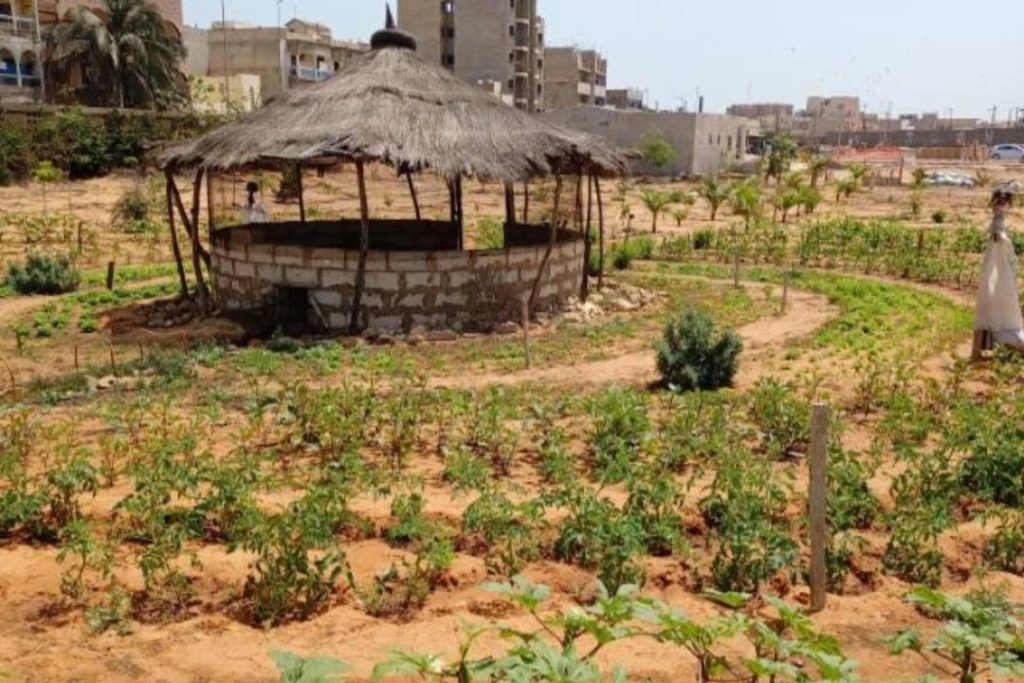
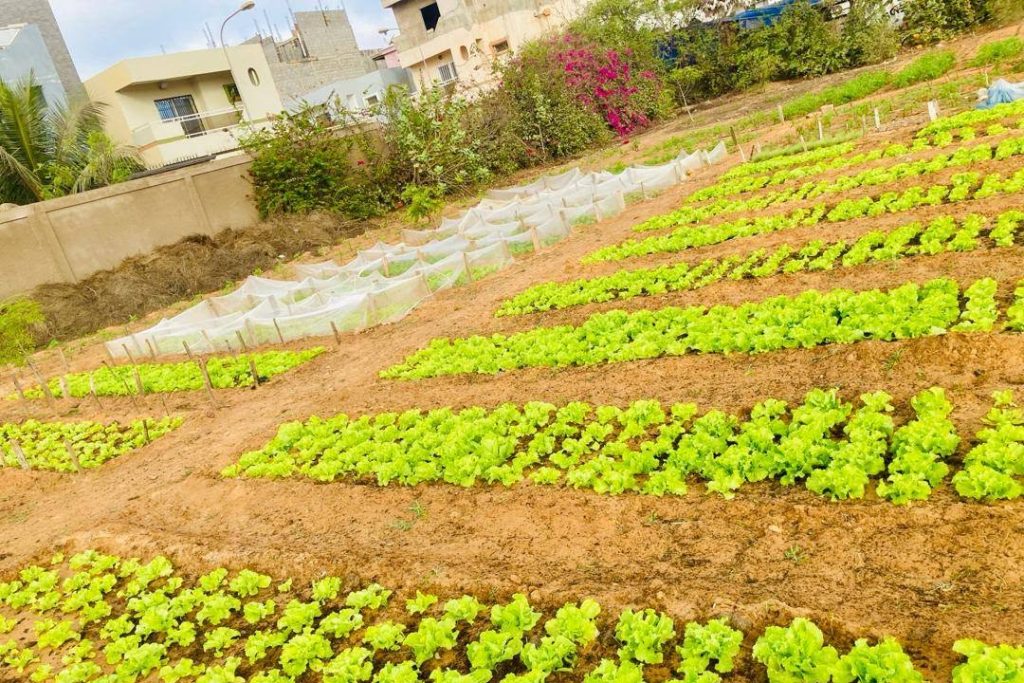
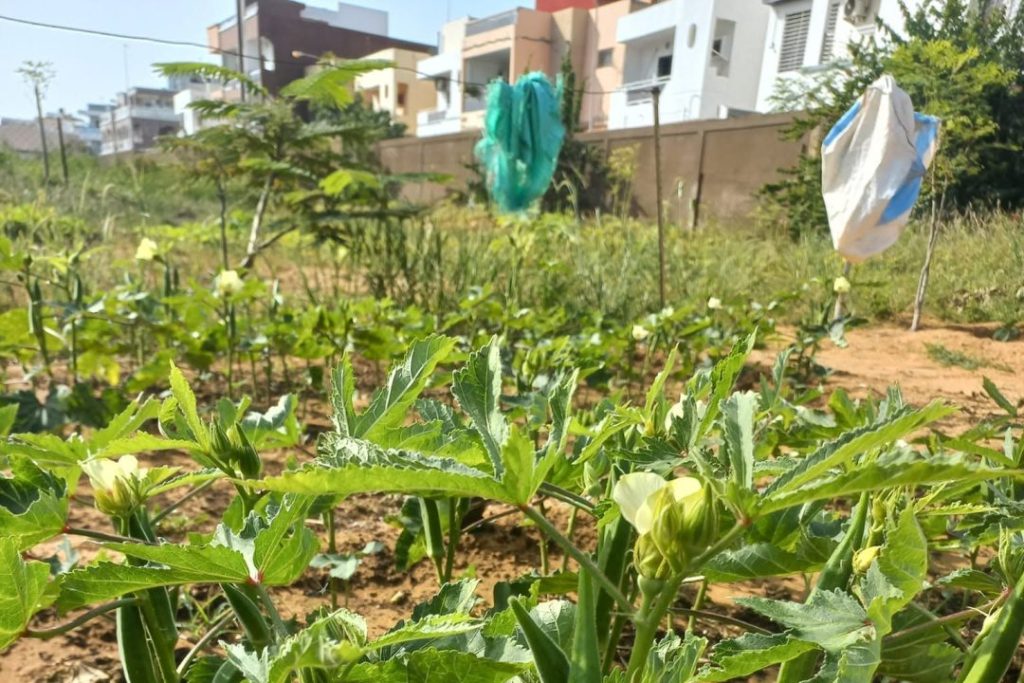
Photo credits: Tolou Keur Dalal Diam, Senegal – www.asergmv.sn
Tolou Keur is an agroecological food-forest programme developed within Senegal’s Great Green Wall framework. It is associated with the Agence sénégalaise de la Reforestation et de la Grande Muraille Verte and is designed to support land restoration, food security, biodiversity, and community resilience through locally anchored food-forest systems.
The model uses circular garden and food-forest layouts adapted to hot, dry conditions, combining useful trees, food crops, medicinal plants, water-retention logic, composting, and community participation. Its purpose is not only to restore degraded land, but to make restoration locally useful by linking ecological recovery with food production and rural livelihoods.
Tolou Keur has become one of Senegal’s most visible Great Green Wall restoration models, with replication potential across suitable sites. Its relevance to SBI lies in its practical grounding: it provides a Senegalese restoration base that can be strengthened through technical exchange, monitoring discipline, capital sequencing, and long-term programme support – and through combination with complementary, field-tested methods such as the Sahelian bocage.
At the Tolou Keur Dalal Diam site, an exploratory collaboration would bring together Tolou Keur’s food-forest logic and the Sahelian bocage method that Terre Verte brings from more than thirty years of field experience in Burkina Faso. The work is closer to research than to demonstration: rather than proving an established method, it sets out to work out, on the ground, how these approaches can be combined into a more durable and more affordable approach to dryland restoration. It remains open to methods beyond those of Tolou Keur and Terre Verte where these add value. The broader aim is twofold: a method accessible to farmers across the Sahel, and a Senegalese line of restoration research that feeds knowledge and data into SBI, contributing to the ongoing refinement and quality of its framework.
Dalal Diam is the first of many such collaborations planned across Senegal – within and beyond the Tolou Keur network – with additional partnerships to be announced shortly.
The articles below examine systemic conditions and signals shaping dryland environments and regenerative opportunity spaces. Together they provide contextual perspective on ecological dynamics, socio-economic pressures, and emerging pathways relevant to long-horizon restoration and resilience efforts.

128 City Road
London EC1V 2NX
United Kingdom
Copyright © Terravive Group 2025. All Rights Reserved.
Companies House reg. no 16233378